

Views: 226 Author: Site Editor Publish Time: 2025-11-05 Origin: Site


In industrial operations, standard solutions often fall short when projects demand unique specifications. At Mingte Group, we understand that every industrial process has its own nuances, and a ready-made option may not address the full scope of requirements. Whether the challenge involves handling corrosive substances, managing high-pressure processes, or accommodating tight installation spaces, a custom ASME tank can provide the performance, durability, and flexibility needed for seamless operations. Our tanks are designed with precision-engineered tank ends and fittings to ensure both safety and operational efficiency, meeting the most demanding industrial applications. By opting for customization, businesses can avoid costly process interruptions, extend equipment life, and achieve operational efficiency that off-the-shelf solutions simply cannot deliver.
Selecting a custom ASME tank is not simply a matter of preference; it is often a necessity dictated by project requirements. Recognizing the signals that standard tanks cannot meet your operational needs is crucial for avoiding costly redesigns and operational delays.
Many industrial processes involve conditions that off-the-shelf tanks cannot accommodate. For instance, operations that require extreme pressures, aggressive chemical handling, or precise temperature control often demand specialized materials and engineering. Standard tanks might not resist corrosion from specific chemicals, or their design might not sustain the required pressure ratings. Custom ASME tanks allow engineers to select materials, wall thicknesses, and internal linings tailored to process conditions, ensuring longevity and compliance with safety standards.
Certain chemical processes require tanks capable of withstanding repeated thermal cycling without deformation or compromising structural integrity. For example, pharmaceutical manufacturing often involves sterilization cycles that demand both thermal and mechanical resistance. Custom ASME tanks can incorporate stainless steels, nickel alloys, or other specialized materials to meet these rigorous conditions. The choice of materials, combined with optimized welding and fabrication techniques, ensures reliable operation even under extreme process conditions.
Space constraints can be a significant factor in industrial installations. Manufacturing plants, research facilities, and processing units frequently operate within limited floor space or under height restrictions. Standard tanks might require awkward reconfigurations or create inefficient layouts. Custom tanks, however, can be designed with compact or irregular footprints, fitting seamlessly into the available area while maintaining optimal performance.
In some facilities, the layout must accommodate multiple tanks, piping systems, and auxiliary equipment within a confined footprint. Custom ASME tanks can be engineered with non-standard dimensions or modular configurations that allow for better integration with existing equipment, minimizing installation complexity. Additionally, tanks can be designed for vertical or horizontal orientations depending on available space and process flow requirements.
Some industrial operations require tanks that serve multiple purposes, such as mixing, heating, or holding reactions simultaneously. A standard tank often lacks the internal features to handle combined functions efficiently. Custom ASME tanks can incorporate specialized internal components, such as baffles, mixers, or dual-zone heating jackets, enabling the tank to perform multiple roles safely and efficiently, all while maintaining ASME certification.
For example, in food processing, a tank may need to perform gentle mixing to prevent product damage while also maintaining precise temperature control for pasteurization. Similarly, in chemical processing, a tank may simultaneously facilitate chemical reactions and store intermediate products without contamination. Customization ensures these combined functions can be executed safely and efficiently, enhancing overall productivity.
Once the need for customization is established, the next step is to understand which design elements significantly impact performance and operational efficiency.
Baffles play a critical role in enhancing mixing and flow dynamics within a tank. In custom ASME tanks, baffles can be strategically positioned to prevent vortex formation, improve circulation, and ensure uniform temperature distribution. Properly designed baffles reduce stagnation zones, which is particularly important in chemical processing or food production where consistency and safety are paramount.
The positioning, number, and angle of baffles are carefully calculated based on fluid viscosity, mixing speed, and tank dimensions. In some cases, specialized baffle shapes are used to achieve optimal turbulence without causing shear-sensitive damage to the product. Properly designed internal baffles not only improve mixing efficiency but also reduce energy consumption by minimizing the time required to achieve homogeneous conditions.
Many processes require precise temperature control, either for heating reactions or cooling sensitive substances. Custom ASME tanks can integrate external or internal jackets designed to circulate heat-transfer fluids efficiently. This feature allows precise thermal management, reduces energy consumption, and enhances overall process reliability.
Jacket designs can vary from simple single-pass systems to complex multi-zone arrangements, enabling different sections of the tank to be maintained at separate temperatures. In applications such as polymer processing or chemical synthesis, where temperature gradients must be strictly controlled, multi-zone jackets provide critical advantages. Custom ASME tanks allow engineers to select the most suitable jacket type, flow configuration, and insulation materials for each process requirement.
Tank ends, often underestimated, dramatically influence internal flow patterns and stress distribution. Hemispherical, torispherical, elliptical, or custom-shaped tank ends are selected based on the tank’s volume, pressure rating, and functional requirements. For example, hemispherical ends provide excellent pressure distribution and minimize stress concentration, while elliptical ends are ideal for tanks that require more headspace within constrained dimensions. Customization of tank ends ensures that internal flow dynamics and mechanical stresses are optimized, leading to longer tank life and safer operation.
Additionally, tank ends can be designed to integrate nozzles, inspection ports, or mixing elements without compromising structural integrity. The choice of tank end geometry also affects fabrication complexity and cost, making early design planning crucial to achieving the best balance between functionality, safety, and cost-efficiency.
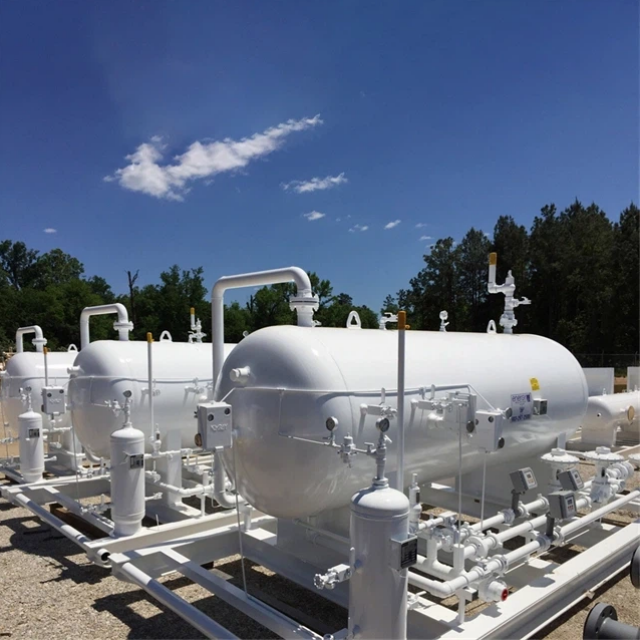
Designing a custom ASME tank involves a rigorous engineering process to guarantee compliance, safety, and performance.
The process begins with understanding the client’s operational requirements. Engineers at Mingte Group collaborate closely with clients to determine the tank’s purpose, capacity, pressure range, materials of construction, and any special functional requirements such as heating, cooling, or agitation. Conceptual design discussions also consider installation constraints, auxiliary equipment interfaces, and long-term maintenance access.
Once conceptual requirements are finalized, detailed engineering drawings are prepared. These drawings include dimensions, materials, internal configurations, and tank end specifications. Finite Element Analysis (FEA) is conducted to predict stress distribution, deformation under pressure, and thermal performance. FEA ensures that the tank design can withstand operational conditions safely over its intended lifespan.
Design engineers also model fluid dynamics and thermal behavior within the tank to ensure efficient process performance. Computational Fluid Dynamics (CFD) simulations may be used for high-viscosity fluids, multiphase mixtures, or reactive processes. This step allows engineers to optimize baffle placement, inlet/outlet positions, and heating or cooling jacket efficiency, resulting in a tank design that meets both safety and performance targets.
After design approval, fabrication begins under stringent quality control procedures. Every tank undergoes shop inspection for weld integrity, dimensional accuracy, and compliance with ASME code requirements. Advanced non-destructive testing methods, such as radiographic inspection, ultrasonic testing, and dye-penetrant checks, ensure defect-free fabrication. Once the tank passes inspection, it receives ASME certification, confirming its suitability for high-pressure industrial applications.
Throughout the process, Mingte Group maintains detailed documentation, including material traceability, design calculations, and inspection reports. This documentation provides clients with full transparency and peace of mind, demonstrating adherence to both ASME standards and internal quality assurance protocols.
While specific client data may remain confidential, generalized examples can illustrate the advantages of custom ASME tanks in real-world applications.
One industrial client required a tank capable of handling high-viscosity fluids while maintaining uniform heating. By integrating internal baffles and a dual-zone heating jacket, the custom ASME tank enhanced fluid mixing and reduced processing time. The client reported significant improvements in process efficiency and product quality, demonstrating the value of tailored tank features.
Another example involves a chemical manufacturing plant that needed a tank for simultaneous mixing and reaction. Custom-designed tank ends and strategically placed baffles optimized flow patterns, preventing dead zones and ensuring uniform reaction rates. This customization allowed the client to achieve higher yields with less energy input, highlighting the operational advantages of a well-engineered ASME tank.
In a facility with limited floor space, a standard cylindrical tank would have required extensive reconfiguration of existing equipment. A custom tank with an elliptical footprint allowed seamless integration into the confined space, preserving operational workflow and minimizing installation costs. Custom orientations and modular tank designs further enabled easy maintenance access without disrupting neighboring equipment.
Certain chemical processing operations suffer from accelerated wear and corrosion in standard tanks. Custom ASME tanks fabricated from specialized corrosion-resistant alloys and with optimized flow patterns minimized maintenance intervals and extended the service life of the equipment. Reduced downtime and maintenance costs contributed to significant operational savings over the tank’s lifecycle.
Custom tanks also allow for easier cleaning and inspection, particularly in industries with strict hygiene requirements, such as pharmaceuticals or food processing. Incorporating access ports, removable internal components, and smooth surface finishes reduces contamination risks and improves overall operational efficiency.
Custom ASME tanks are more than just vessels; they are engineered solutions tailored to complex industrial needs. At Mingte Group, our expertise in designing tanks with specialized tank ends, internal baffles, and thermal jackets ensures that your industrial process operates safely, efficiently, and reliably. From concept and design to FEA validation and ASME stamping, we deliver tanks built to exact specifications and operational demands. To explore tailored solutions for your unique requirements, contact us today and discover how our engineered storage solutions and process vessels can enhance your industrial operations while meeting the highest standards of quality and safety.