

Views: 286 Author: Site Editor Publish Time: 2025-10-31 Origin: Site


When investing in industrial storage solutions, understanding the total cost of ownership is critical. Engineers, procurement specialists, and plant managers are increasingly evaluating not just the upfront purchase price but the long-term expenses associated with operation, maintenance, and potential downtime. For those seeking high reliability and compliance, an ASME tank provides a durable and safe solution, but its lifetime cost depends on multiple factors including material selection, design, maintenance, and vendor support. Mingte Group, with over 20 years of experience in manufacturing high-quality industrial equipment, offers a range of ASME tanks designed to meet rigorous standards and minimize long-term costs, ensuring a sound investment for diverse industrial applications. Choosing a properly engineered ASME tank can also help companies reduce regulatory risks and avoid costly production interruptions.
The initial purchase price of an ASME tank often draws the most attention, yet it represents only a fraction of the total lifetime cost. Understanding what goes into the upfront investment helps buyers anticipate how these costs influence long-term ownership.
The tank design significantly affects cost. Variables such as volume, pressure rating, and intended application require careful engineering to ensure safety and efficiency. Complex designs may involve finite element analysis (FEA) to validate stress and deformation under operating conditions. While these analyses add to initial costs, they can prevent expensive failures later on. Mingte Group integrates advanced engineering in all ASME tank designs to optimize material use while maintaining safety margins, providing better long-term value. Moreover, proper design consideration for access points, manways, and instrumentation ports ensures easier maintenance and inspection, reducing operational headaches over time.
Material selection plays a pivotal role in both cost and longevity. Stainless steel is commonly used for its corrosion resistance and durability, but alloy composition, thickness, and welding quality directly impact the purchase price. Custom tank ends, specialized coatings, and precision fabrication techniques add additional cost but reduce maintenance frequency and operational risks. By sourcing premium raw materials and employing skilled fabrication, Mingte Group ensures its ASME tanks maintain structural integrity for decades, balancing initial expenditure against future savings. Investing in high-quality materials also helps prevent chemical reactions or stress cracking that could compromise the tank’s performance.
Tank ends—hemispherical, elliptical, or flat—affect both strength and cost. Hemispherical ends provide the best stress distribution but are more expensive to fabricate, whereas flat ends reduce fabrication complexity at the expense of higher localized stresses. In addition, nozzle placement and flange standards influence cost. Properly designed tank ends reduce failure risks and extend service life, making the initial investment more worthwhile. Choosing the right connection design can also reduce installation costs, as compatible flanges and fittings minimize alignment and assembly challenges.
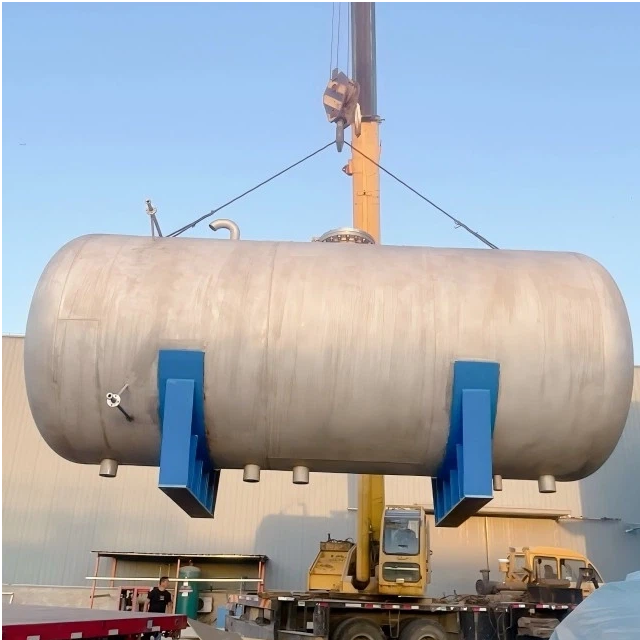
Moving an ASME tank from manufacturer to site involves significant logistical planning. Oversized or high-pressure tanks require specialized transport and careful handling to prevent damage. These expenses, often overlooked, contribute to the overall CAPEX. Mingte Group provides comprehensive shipping and handling support, helping clients manage transportation efficiently and safely. In addition, pre-shipment inspections and secure packaging further protect the tank, avoiding costly replacements or repairs upon delivery.
Customization can greatly influence purchase costs. Tanks tailored for unique chemical compatibility, additional instrumentation, or unusual operating conditions typically carry higher upfront expenses. However, these modifications often prevent costly operational issues and downtime. Investing in the right customization ensures the ASME tank delivers the expected performance, reduces maintenance needs, and extends its useful life, creating a lower effective total cost of ownership. Furthermore, incorporating features like temperature or pressure sensors during fabrication can help monitor tank conditions in real-time, reducing operational risk.
Beyond the purchase price, operating costs and ongoing maintenance significantly impact the lifetime cost of an ASME tank. These recurring expenses include inspections, coatings, spare parts, and preventive maintenance activities.
ASME tanks are subject to regulatory and safety inspections, including internal and external examinations, thickness measurements, and pressure testing. Regular inspections help identify early signs of corrosion, cracking, or structural fatigue, preventing catastrophic failures. While inspections incur labor and equipment costs, they protect the investment by extending the tank’s service life and ensuring compliance with safety standards. Mingte Group’s tanks are designed to facilitate inspections with convenient access points and clear documentation, reducing downtime during routine checks.
Applying and maintaining protective coatings is essential for tanks exposed to corrosive media. Stainless steel provides inherent corrosion resistance, but coatings may be necessary for chemical compatibility or enhanced longevity. Periodic recoating or repair ensures the tank maintains integrity, avoiding leaks or structural damage that can lead to costly downtime. In addition, Mingte Group provides guidance on optimal coating systems tailored to specific process fluids, helping operators avoid over-specification or under-protection.
Maintaining a ready supply of critical spare parts—such as gaskets, valves, and fittings—reduces repair time and operational disruption. Investing in original equipment manufacturer (OEM) tank ends and parts, like those available from Mingte Group, ensures compatibility and reliability. While this adds to ongoing operating costs, it minimizes the risk of incompatible replacements that could compromise safety and increase long-term expenses. Strategic spare part planning can also reduce inventory costs by aligning replacements with preventive maintenance schedules.
Understanding typical failure modes is crucial for estimating ongoing costs. Corrosion, weld fatigue, and gasket failure are common challenges in industrial tanks. Each issue requires specific maintenance actions—corrosion may necessitate localized repairs or recoating, weld fatigue could require structural reinforcement or even section replacement, and gasket wear demands periodic inspection and replacement. Anticipating these maintenance needs allows accurate budgeting for the ASME tank’s operational life, ensuring downtime is minimized and overall costs are predictable. Training personnel on common signs of tank stress further improves preventive maintenance efficiency.
Indirect costs, often overlooked in simple price comparisons, can dramatically affect the total cost of ownership. Downtime due to maintenance, repairs, or safety incidents can lead to production losses, regulatory fines, and reputational damage.
Selecting the appropriate material, design, and pressure rating reduces the likelihood of operational disruptions. Tanks built to exact specifications withstand environmental stresses and chemical exposure, decreasing the frequency of unplanned maintenance and minimizing downtime. Conversely, underspecified tanks may experience repeated failures, significantly inflating long-term costs. High-quality engineering also contributes to worker safety by reducing the risk of leaks or explosions.
Several common factors increase indirect costs:
Inadequate Material Selection: Choosing materials that cannot withstand operating conditions leads to premature corrosion, leaks, or structural failure. Replacing or repairing poorly specified tanks adds both direct repair costs and lost production time.
Poor Documentation and Traceability: Incomplete documentation complicates inspections, maintenance, and regulatory compliance. Missing ASME U-stamps, NDE records, or material mill certificates may require additional testing or even retroactive certification, creating unforeseen expenses.
Improper Installation or Handling: Mistakes during installation can lead to misalignment, stress points, or leaks, all of which increase operational costs over time.
By addressing these potential cost drivers during the design and purchase phase, operators can mitigate operational risks, protect employees, and reduce long-term expenses.
When evaluating multiple ASME tank suppliers, comparing quotes purely on upfront cost can be misleading. A fair comparison requires a comprehensive assessment of technical specifications, documentation, and services offered.
To ensure an apples-to-apples comparison, request the following items in the vendor’s quotation:
ASME U-Stamp Certification: Verifies compliance with the ASME Boiler and Pressure Vessel Code.
Non-Destructive Examination (NDE) Records: Demonstrates the tank’s welds and structure meet quality standards.
Material Mill Certificates: Confirms chemical composition and mechanical properties of materials used.
Tank Ends Details: Specifies end type, thickness, and fabrication method to evaluate strength and longevity.
Maintenance and Lifecycle Services: Availability of spare parts, technical support, and after-sales service.
Mingte Group provides detailed documentation and OEM replacement parts, helping clients make informed decisions based on the total cost of ownership rather than solely on the initial purchase price. Our engineers also assist in verifying technical details to ensure tanks are properly specified for each application, preventing unforeseen operational costs.
Evaluating the lifetime cost of an ASME tank requires more than comparing initial quotes. Considering design, material quality, customization, maintenance, downtime, and indirect costs provides a holistic view of investment value. Mingte Group’s ASME tanks deliver durable performance with comprehensive documentation and aftermarket support, ensuring long-term reliability across industrial applications. Investing in a properly designed tank reduces operational risk, extends service life, and optimizes total cost of ownership. For detailed guidance, technical consultation, or to explore our full range of ASME tanks and OEM tank ends and spare parts, contact us today and secure a solution that balances upfront investment with lifetime efficiency.